

In the Pharmaceutical, Medical Device, Electronics, and Semiconductor industries, cleanroom HVAC systems play a critical role in contamination control and product quality assurance. At the heart of every cleanroom air handling system are HEPA and ULPA filters, the final-stage filtration components responsible for removing airborne particulate contaminants before clean air enters the controlled environment.
However, many manufacturers still ask the same question:
Should you choose a HEPA filter or a ULPA filter? Does higher filtration efficiency always mean better performance?
In this article, GERA Hi-Tech Vietnam explains the key differences between HEPA and ULPA filters, their applications, and why HEPA/ULPA filter integrity testing is essential for maintaining GMP-compliant cleanrooms.
What Is a HEPA Filter?
A HEPA (High-Efficiency Particulate Air) filter is a high-performance air filter designed to remove at least 99.97% of airborne particles measuring 0.3 μm (microns).
Thanks to its excellent balance of filtration efficiency, pressure drop, and operating cost, the HEPA filter remains the most widely used final filter in GMP pharmaceutical cleanrooms and ISO 14644 classified cleanrooms.
Typical Applications of HEPA Filters
HEPA filters are commonly installed in:
- Pharmaceutical manufacturing areas
- Tablet and capsule production facilities
- Weighing and dispensing rooms
- Packaging areas
- Air Handling Units (AHUs)
- Cleanroom HVAC systems
- General ISO-classified cleanrooms
What Is a ULPA Filter?
A ULPA (Ultra-Low Penetration Air) filter offers an even higher level of air filtration, removing at least 99.9995% of airborne particles measuring 0.12 μm.
Compared with HEPA filters, ULPA filters capture significantly finer particles. However, they also create a higher pressure drop, requiring HVAC systems to be specifically engineered to accommodate the increased airflow resistance.
Typical Applications of ULPA Filters
ULPA filters are primarily used in highly critical cleanroom environments, including:
- Aseptic filling suites
- Sterile injectable manufacturing
- Biological Safety Cabinets (BSCs)
- Semiconductor fabrication facilities
- Precision optics manufacturing
- Nanotechnology laboratories
- Ultra-clean production environments
HEPA vs. ULPA Filters: Key Differences
| Criteria | HEPA Filter | ULPA Filter |
|---|---|---|
| Filtration Efficiency | ≥99.97% @ 0.3 μm | ≥99.9995% @ 0.12 μm |
| Particle Removal Capability | High | Ultra High |
| Pressure Drop | Lower | Higher |
| Energy Consumption | Lower | Higher |
| Initial Investment | More Economical | Higher Cost |
| Typical Applications | Standard GMP Cleanrooms | Critical Sterile & Ultra-Clean Areas |
Is a ULPA Filter Always Better Than a HEPA Filter?
Not necessarily.
Although ULPA filters provide superior filtration efficiency, they also introduce several engineering challenges:
- Higher airflow resistance
- Increased fan power requirements
- Greater energy consumption
- Higher replacement costs
- Increased HVAC operating expenses
For the majority of pharmaceutical manufacturing facilities, HEPA filters remain the most practical and cost-effective solution, provided the HVAC system is properly designed, installed, qualified, and maintained in accordance with GMP and ISO standards.
The selection between HEPA and ULPA filters should always be based on:
- Cleanroom classification
- Process criticality
- GMP and EU GMP Annex 1 requirements
- ISO 14644 standards
- HVAC system capability
- Long-term operating and maintenance costs
HEPA/ULPA Filter Integrity Testing: A Critical Requirement for GMP Compliance
Installing a high-quality filter alone does not guarantee cleanroom performance.
During installation or routine operation, filters may develop issues such as:
- Seal leakage
- Frame leakage
- Filter media damage
- Improper installation
- Performance degradation over time
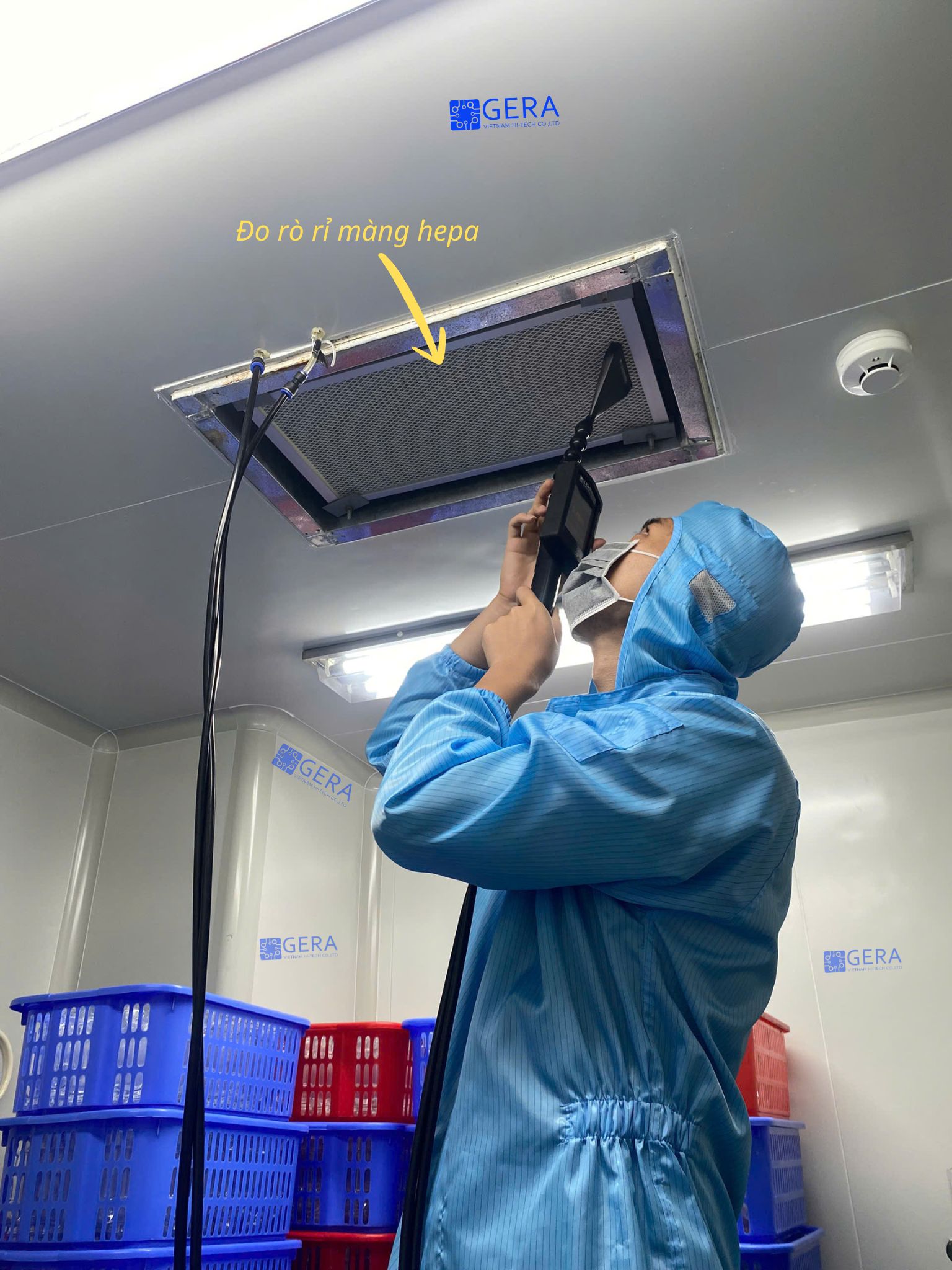
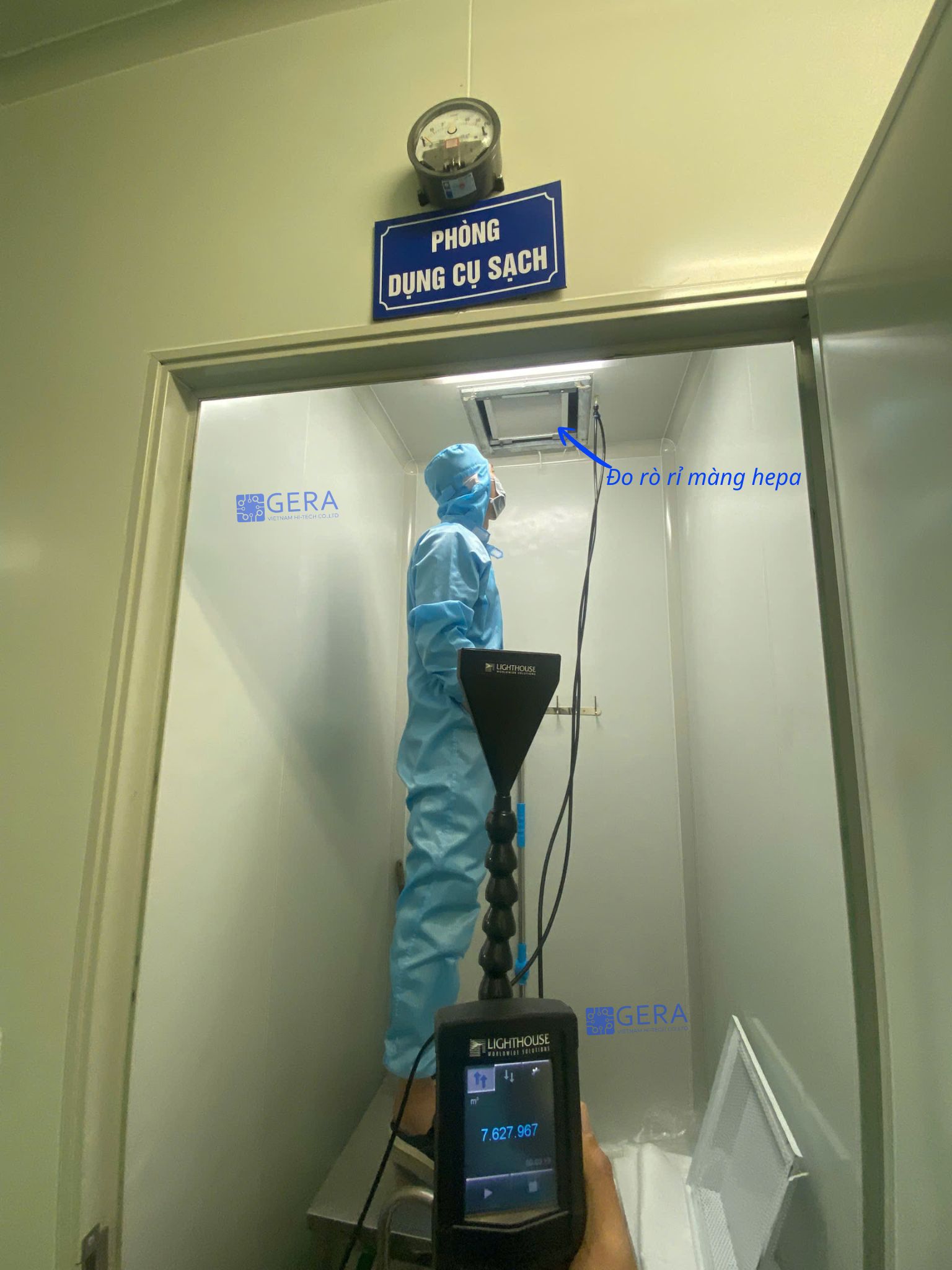
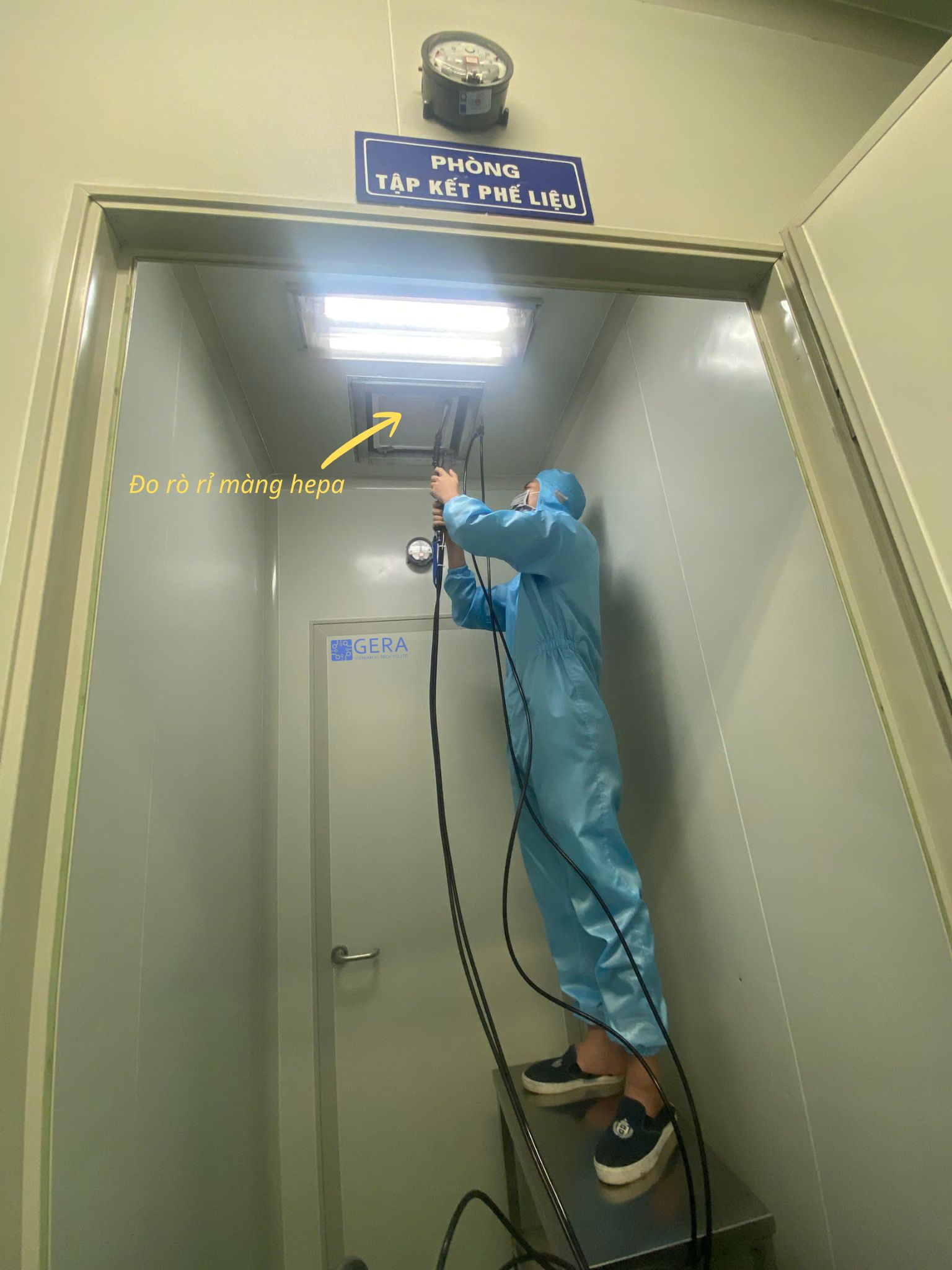
For this reason, HEPA/ULPA Filter Integrity Testing (also known as Leak Testing) is a mandatory qualification procedure for cleanrooms operating under GMP and ISO 14644 requirements.
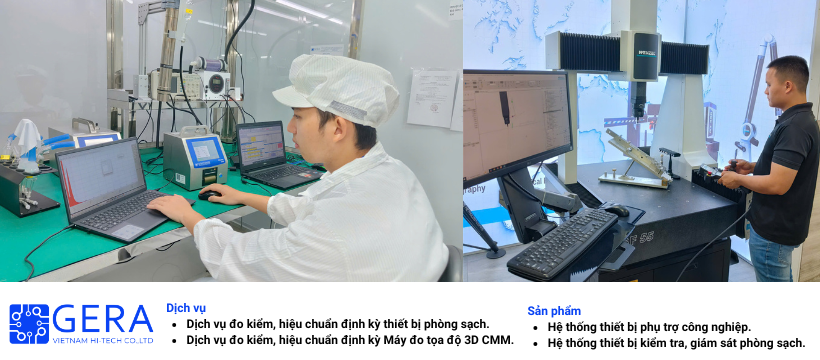
Using an Aerosol Challenge Test in combination with a calibrated Photometer, qualified engineers can accurately verify:
- Overall filter integrity
- Localized leakage across the filter media
- Seal integrity between the filter and housing
- Final filter system performance
Routine HEPA/ULPA filter integrity testing helps manufacturers:
- Detect leaks before contamination occurs
- Maintain validated cleanroom performance
- Meet regulatory inspection requirements
- Reduce product contamination risks
- Protect production yield
HEPA/ULPA Filter Integrity Testing Services by GERA Hi-Tech Vietnam
GERA Hi-Tech Vietnam provides professional HEPA/ULPA Filter Integrity Testing Services for cleanrooms operating in the:
- Pharmaceutical Industry
- Medical Device Manufacturing
- Semiconductor Industry
- Electronics Manufacturing
- Biotechnology Facilities
Our experienced validation engineers utilize industry-leading testing equipment to perform:
- HEPA/ULPA Filter Integrity Testing
- Filter Leak Testing
- Final Filter Performance Verification
- Filter Seal Integrity Assessment
All testing is performed in accordance with internationally recognized cleanroom standards and current GMP requirements.
Conclusion
Both HEPA filters and ULPA filters are essential components of modern cleanroom HVAC systems. However, each filter type is designed for different contamination control requirements.
Selecting the appropriate filter—and conducting routine HEPA/ULPA Filter Integrity Testing—helps manufacturers:
- Maintain cleanroom classification
- Ensure GMP and ISO 14644 compliance
- Minimize contamination risks
- Improve HVAC operating efficiency
- Reduce long-term maintenance costs
- Protect product quality and patient safety
If your facility requires professional HEPA/ULPA Filter Integrity Testing Services, the engineering team at GERA Hi-Tech Vietnam is ready to provide reliable, standards-compliant solutions tailored to your cleanroom application.